Back to News...
Few sporting events in the world capture the imagination quite like the Wimbledon Tennis Championships.
Held each summer in southwest London, Wimbledon is more than just a tournament—it is a celebration of tradition, excellence, and timeless British culture.
Wimbledon is the oldest tennis tournament in the world, first held in 1877 at the All England Lawn Tennis and Croquet Club. What began as a gentlemen’s singles competition has grown into one of the four Grand Slam tournaments, alongside the Australian Open, French Open, and US Open.
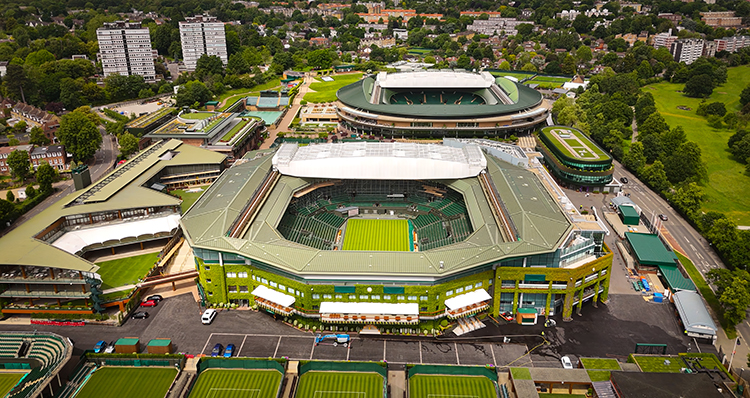
From its earliest days, Wimbledon established traditions that have endured for nearly 150 years. The pristine grass courts—now synonymous with the Championships—remain a defining feature, offering a unique style of play that rewards precision, speed, and finesse.
Throughout its history, Wimbledon has been graced by some of the greatest players the sport has ever seen. Names such as Martina Navratilova, Roger Federer, Serena Williams, Björn Borg, and Novak Djokovic have become inseparable from the tournament’s legacy. For British audiences, the victories of Fred Perry in the 1930s and Andy Murray in 2013 and 2016 hold a special place in national memory.
Wimbledon’s charm lies not only in its sporting excellence but also in its enduring traditions.
Players are famously required to wear predominantly white clothing—a rule introduced in the Victorian era to reflect decorum and still strictly enforced today. Spectators, meanwhile, enjoy strawberries and cream, a culinary tradition that has become as iconic as the tennis itself.

Then there is “The Queue”—a uniquely British institution. Fans line up, sometimes overnight, for the chance to purchase on-the-day tickets, reinforcing Wimbledon’s reputation as a tournament that welcomes both royalty and everyday enthusiasts alike.
Rain, too, has historically played its part, often interrupting play. However, modern innovations have helped mitigate its impact, blending tradition with practicality.
While Wimbledon honours its past, it has not stood still.
Wimbledon was one of the first major tournaments to award equal prize money to male and female players, a milestone achieved in 2007 that continues to shape the sport today.
In recent years, the Championships have embraced technological and structural advancements to enhance the experience for players and spectators alike.
The introduction of retractable roofs over Centre Court (in 2009) and No.1 Court (in 2019) has ensured that matches can continue regardless of the famously unpredictable British weather. Hawk-Eye technology, used to challenge line calls, has become an integral part of match play, adding both fairness and drama.
More recently, Wimbledon has taken further steps into the modern era with the adoption of fully electronic line calling in certain events and ongoing improvements to its digital fan experience. From streaming options to interactive apps, the tournament now reaches a global audience in ways unimaginable when it first began.
What makes Wimbledon truly special is its ability to evolve without losing its identity. It is a place where history is not simply remembered but actively experienced—from the carefully manicured lawns to the echoes of past champions.
Each July, as players step onto the grass courts dressed in white, they become part of a living tradition that stretches back nearly a century and a half. For fans around the world—and particularly here in Britain—Wimbledon is not just a tournament; it is a cherished summer ritual.
Why not create a memory? For tennis players and spectators alike Shop tennis gifts here